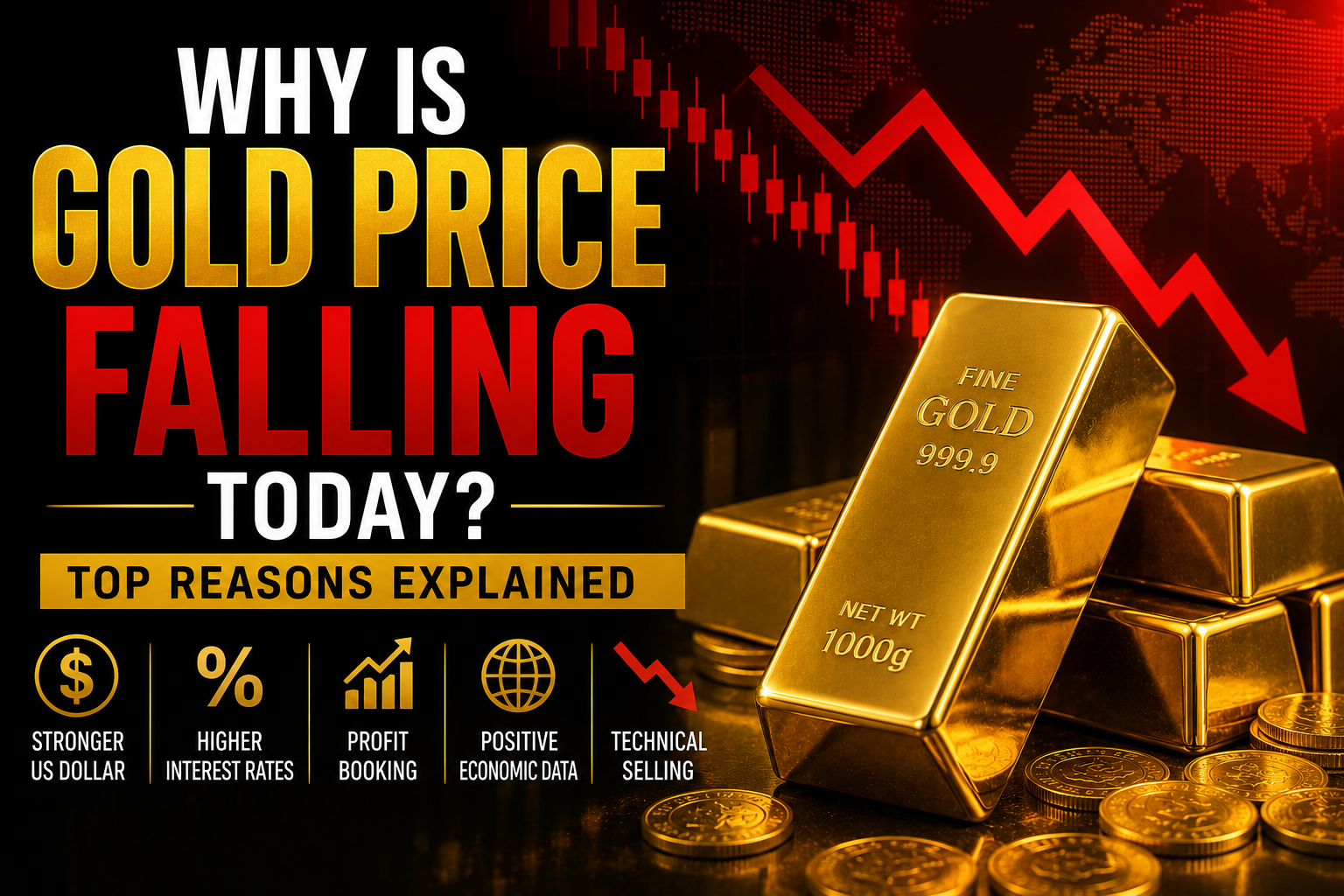
Gold is known as one of the safest investment options, but its price does not always move upward. Many investors are asking, “Why is gold price falling today?” after noticing weakness in the precious metal market. Gold prices can decline for several reasons, including a stronger US dollar, rising interest rates, profit booking, and changing investor sentiment.
If you are planning to invest in gold or trade it in the commodity market, understanding the reasons behind today’s price movement can help you make better investment decisions instead of reacting emotionally.
1. Stronger US Dollar Is Putting Pressure on Gold
One of the biggest reasons why gold prices fall is the strength of the US dollar. Gold is traded globally in US dollars, so when the dollar becomes stronger, gold becomes more expensive for buyers using other currencies. As demand decreases, gold prices often move lower.
Currency markets are closely connected to gold prices. Even a small rise in the dollar index can create selling pressure in the gold market. This is why traders always monitor the performance of the US dollar before making trading decisions.
A stronger dollar does not always mean gold will continue falling, but it can create short-term weakness until market conditions change.
2. Higher Interest Rates Reduce Gold Demand
Interest rates have a major influence on gold prices. Unlike savings accounts or government bonds, gold does not generate interest or dividends. When central banks raise interest rates, many investors move their money into assets that provide fixed returns.
As a result, demand for gold decreases, causing prices to fall. Investors closely watch statements from central banks because future interest rate decisions often determine the short-term direction of gold prices.
If markets believe that interest rates will remain high for a longer period, gold may continue facing downward pressure.
3. Profit Booking by Traders
Another common reason behind today’s gold price decline is profit booking. After a strong rally, many traders choose to sell their holdings and lock in profits. This temporary increase in selling can push prices lower even when the long-term outlook for gold remains positive.
Profit booking is a normal part of every financial market. It does not necessarily mean that the overall trend has changed. Once selling pressure decreases, buyers often return if market conditions remain supportive.
Short-term traders frequently use technical analysis to identify resistance levels where profit booking is likely to occur.
4. Positive Economic Data Can Reduce Safe-Haven Demand
Gold is considered a safe-haven asset because investors buy it during periods of uncertainty. However, when economic data shows stronger growth, lower unemployment, or improving business conditions, investors often shift their money toward stocks and other riskier assets.
Positive economic reports reduce the need for safe-haven investments like gold. As investor confidence improves, gold demand may weaken, resulting in lower prices.
Market sentiment can change quickly after important economic announcements, making gold one of the most closely watched commodities in the world.
5. Technical Selling in the Gold Market
Technical analysis also plays an important role in daily gold price movements. Many traders use indicators such as Moving Averages, RSI, MACD, Fibonacci retracement levels, and support and resistance zones to make trading decisions.
If gold falls below an important support level, automated trading systems and technical traders may trigger additional sell orders. This can accelerate the decline even if there is no major economic news affecting the market.
Similarly, if gold rebounds from support levels, buyers may return and push prices higher again.
Should You Buy Gold While Prices Are Falling?
A falling gold price does not always mean it is a bad investment. Many long-term investors actually see price declines as buying opportunities. Purchasing gold during market corrections can help reduce the average cost of investment over time.
However, investors should avoid making decisions based only on one day’s price movement. It is always better to consider long-term economic trends, inflation expectations, central bank policies, and overall market conditions before investing.
Short-term traders should focus on proper risk management by using stop-loss orders and avoiding excessive leverage.
Final Thoughts
If you are wondering why gold price is falling today, the answer usually involves a combination of economic and market factors rather than a single event. A stronger US dollar, higher interest rates, profit booking, positive economic data, and technical selling are among the most common reasons behind short-term declines.
Although today’s market may appear weak, gold remains one of the most trusted assets for wealth preservation and portfolio diversification. Investors should avoid reacting emotionally to daily price fluctuations and instead focus on long-term trends and disciplined investment strategies.
By staying informed about economic developments and understanding what drives gold prices, you can make smarter investment decisions and better prepare for future market opportunities.